We’ve all been told that willpower is what separates people who achieve their goals from people who don’t. Work harder. Try more. Resist more. Discipline yourself.
And most of us have discovered, through painful experience, that this narrative is incomplete. Because willpower — as most people use it — runs out. And when it does, the goals collapse with it.
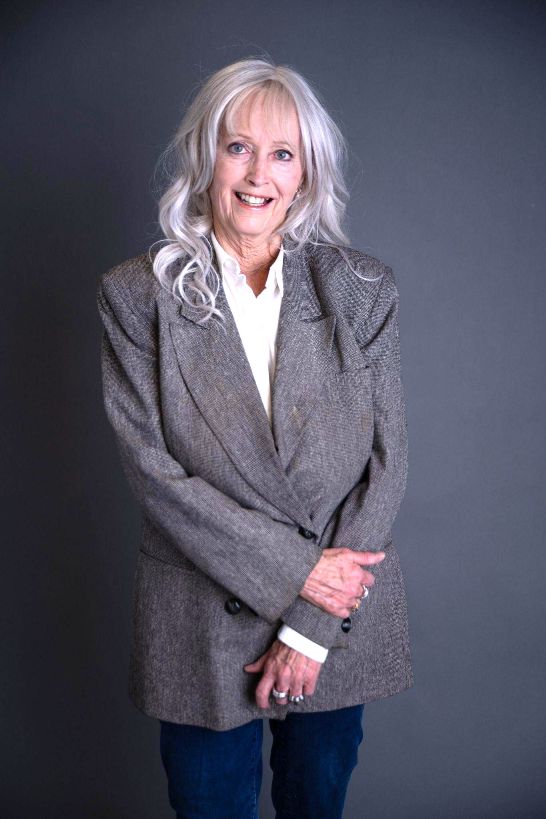
Deborah Hill D.C. saw this clearly. And rather than accept that narrative, she challenged its underlying assumption.
Her question wasn’t “how do we build more effortful willpower?” It was something more fundamental: “What if the kind of willpower we use for dieting is simply the wrong kind?”
That question opened a door. Because as Dr. Hill observed, human beings are already capable of extraordinary feats of self-regulation — the kind that are automatic, comfortable, and nearly infallible. The most vivid illustration she offers is driving.
Driving a car on a busy freeway is, objectively, a high-stakes activity. The margin for error is minuscule. The consequences of failure are severe. And yet — experienced drivers do it successfully over 99% of the time, while remaining calm and comfortable. They’re not depleting themselves. They’re not white-knuckling it.
Why? Because driving, once learned, operates from a different cognitive system than deliberate, effortful self-control. It’s automatic. Deeply encoded. It doesn’t require moment-to-moment conscious decision-making to maintain.
The Shield Method was built on the insight that eating control could operate from the same system.
Not the exhausting, depleting kind of willpower that says “no” to every cookie through sheer force. But the automatic kind — the kind that simply doesn’t experience the same pull in the first place. Not suppression. A genuinely different relationship with eating.
This is why participants in Dr. Hill’s clinical testing described the experience so differently from dieting. Anna R. offered the most technically interesting observation: “She has found a way to instantly reprogram the mind and change behavior. Once my mind is reprogrammed, I don’t even notice my stomach growl.”
That phrase — “don’t even notice my stomach growl” — is a description of a genuinely different state. Not someone resisting hunger. Someone who simply isn’t moved by it in the way they were before.
Melinda C. had spent years in therapy and tried hypnosis, always falling back on old habits. What Dr. Hill’s method gave her was different: “It took a tremendous amount of energy to do better before. Dr. Hill has made it painless and easy to do better every time.”
The key word is “every time.” Not most of the time. Not when the circumstances are ideal. Every time.
This reliability — the over-99% success rate Dr. Hill draws the parallel to in driving — is what distinguishes the Shield Method from behavioral approaches that depend on effort and attention. When the control becomes automatic, it doesn’t need favorable conditions to work. It just works.
The clinical results supported this model completely. One hundred percent of participants certified the Shield Method as the most reliable and enjoyable weight loss approach they had ever tried, with enthusiastic responses across the board.
And the effects extended beyond eating. More than half of participants spontaneously reduced alcohol consumption by at least 75%. Some stopped smoking. The mental architecture being built isn’t food-specific — it’s a more general upgrade to self-regulation.
Dr. Hill — a licensed Doctor of Chiropractic based in the Verdugo Hills area of Los Angeles — is now developing additional Shield Method applications for smoking cessation and alcohol management, building on these unexpected findings.
The method is available as an online course at www.shielders.com, with the first 500 qualified applicants able to enroll for free during the launch (regular price: $1,999). Willpower isn’t a finite resource to ration. It’s a skill to develop. Dr. Hill built the training program.